NEW ORLEANS, LA, UNITED STATES, July 30, 2026 /EINPresswire.com/ —
Swamps are among the most biologically productive ecosystems in North America, providing habitat for an extraordinary variety of plants, birds, reptiles, amphibians, fish, mammals, and countless smaller organisms. While these wetlands are often recognized for their scenic beauty and iconic cypress trees, their ecological importance extends far beyond the landscape. The combination of water, vegetation, seasonal flooding, and abundant food sources creates conditions that support a wide range of animal species throughout the year.
Unlike many environments that experience dramatic seasonal changes in available resources, swamps offer a constantly changing mix of habitats. Shallow water, deeper channels, tree canopies, floating vegetation, mud flats, and dense marsh grasses all exist within relatively small areas. Each of these environments provides shelter, breeding areas, and feeding opportunities for different types of wildlife.
One of the defining characteristics of swamp ecosystems is the presence of standing or slow-moving water. This water supports aquatic plants, insects, crustaceans, mollusks, and small fish that form the foundation of a complex food web. Larger fish, reptiles, birds, and mammals rely on these smaller organisms as food, creating interconnected relationships throughout the ecosystem.
Vegetation plays an equally important role. Bald cypress trees, water tupelo, aquatic grasses, ferns, shrubs, and floating plants provide nesting sites, shade, cover from predators, and breeding habitat for numerous species. Fallen trees and submerged logs create additional shelter for fish, turtles, amphibians, and aquatic invertebrates while contributing nutrients back into the environment as they gradually decompose.
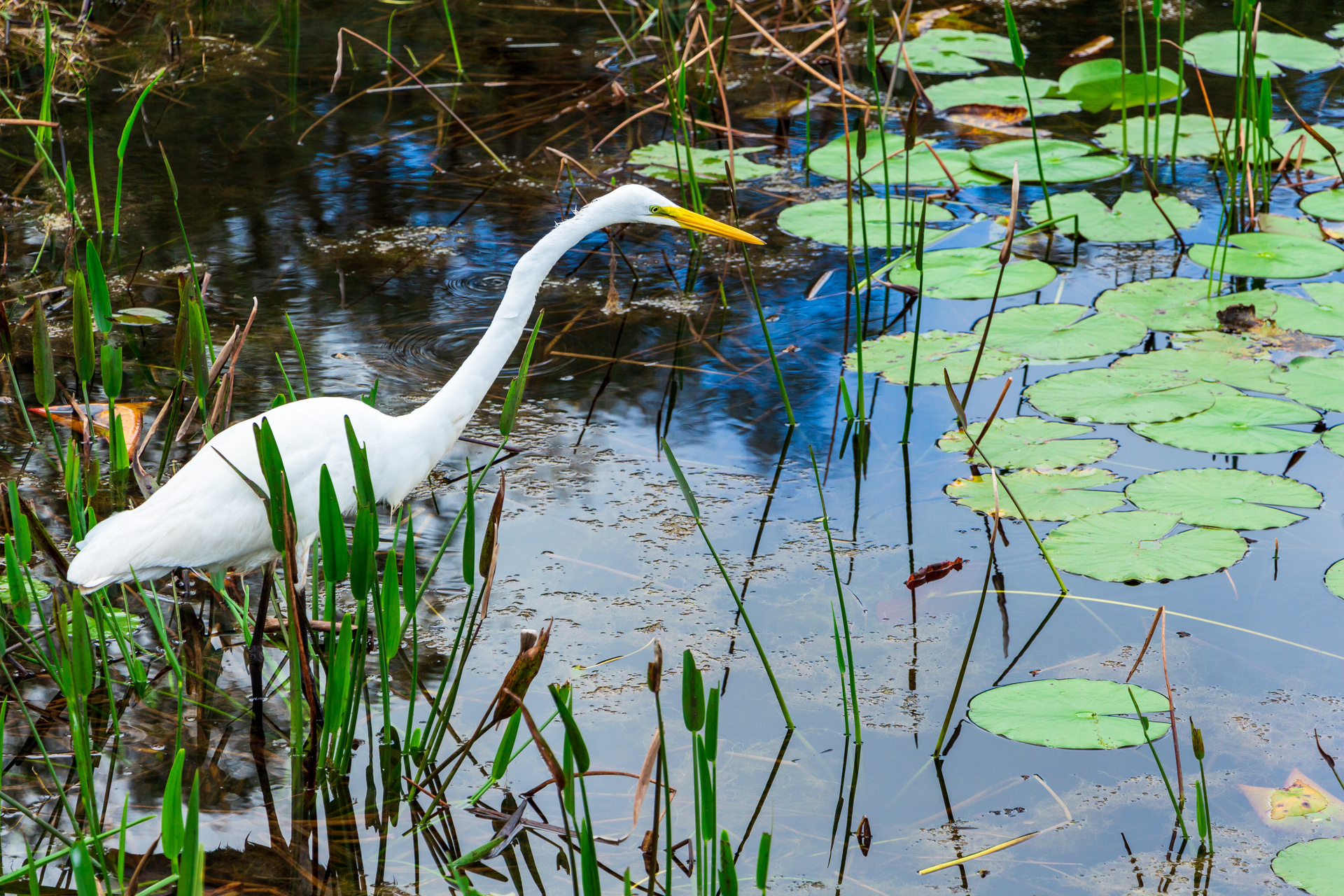
Bird populations thrive within swamp habitats because of the abundance of available food and nesting locations. Wading birds such as herons, egrets, ibis, and spoonbills forage in shallow water where fish, frogs, and crustaceans are plentiful. Wood ducks utilize tree cavities for nesting, while hawks, owls, and other birds of prey hunt throughout the surrounding wetlands and forests.
Reptiles are among the most recognizable swamp inhabitants. American alligators serve as apex predators while also contributing to habitat health. Their nesting behavior and the shallow depressions known as “alligator holes” often retain water during dry periods, providing refuge for fish, amphibians, and other aquatic species. Turtles, snakes, and lizards occupy different ecological niches within the same environment, each contributing to the balance of the ecosystem.
Amphibians also depend heavily on swamp habitats. Frogs, toads, and salamanders require moist environments during various stages of their life cycles. Seasonal rainfall, shallow pools, and dense vegetation create ideal breeding conditions while supporting healthy insect populations that serve as food.
Fish diversity remains another important feature of swamp ecosystems. Species including largemouth bass, catfish, bowfin, gar, sunfish, and crappie utilize submerged vegetation, fallen timber, and changing water levels throughout the year. Many fish species also depend on wetlands as nursery habitats where young fish can develop with relative protection from larger predators.
Mammals are equally well represented. River otters, raccoons, muskrats, mink, bobcats, white-tailed deer, and numerous smaller mammals rely on swamp habitats for food, shelter, and movement corridors. Bats frequently forage above waterways where insect populations are abundant, while squirrels and other tree-dwelling mammals occupy the forest canopy.
Insects, although often overlooked, provide one of the most important links within swamp ecosystems. Dragonflies, damselflies, butterflies, bees, beetles, mosquitoes, and countless other insect species contribute to pollination, decomposition, and food availability for birds, amphibians, reptiles, and mammals. Their presence supports virtually every level of the swamp food web.
Seasonal flooding further enhances biodiversity by transporting nutrients throughout the ecosystem. Floodwaters carry organic material into wetlands, enriching soils and supporting plant growth. As water levels rise and fall throughout the year, new feeding areas become available while fish and wildlife gain access to different parts of the swamp.
The transition zones between open water and dry land also contribute significantly to species diversity. These edge habitats combine characteristics of multiple environments, allowing animals adapted to forests, wetlands, and aquatic ecosystems to utilize the same general area. The result is increased biological diversity within relatively compact geographic regions.
Climate also influences the productivity of Gulf Coast swamps. Mild winters and long growing seasons allow plants to remain productive for much of the year, providing continuous food and shelter for wildlife. Unlike northern ecosystems that experience extended dormant periods, southern swamps continue supporting many species throughout all seasons.
Healthy swamps provide benefits beyond wildlife habitat. Wetlands help filter sediments and pollutants from water, reduce flooding by temporarily storing excess rainfall, stabilize shorelines, and contribute to groundwater recharge. These ecological functions support both wildlife populations and surrounding communities.
Conservation efforts have become increasingly important as wetland habitats face pressure from development, changing water management practices, invasive species, and coastal erosion. Protecting swamp ecosystems helps preserve not only individual species but also the complex ecological relationships that allow such remarkable biodiversity to exist.
“One of the most fascinating parts of exploring Louisiana’s swamps is seeing how every plant, animal, and waterway is connected,” said Milton Walker Jr., owner of Louisiana Tour Company in New Orleans, Louisiana. “Each visit offers opportunities to observe different species interacting within an ecosystem that has developed over thousands of years. The diversity found in these wetlands reflects the balance created by healthy habitat, abundant resources, and natural seasonal changes.”
As researchers continue studying wetland ecosystems, swamps remain valuable examples of how diverse habitats support complex wildlife communities. Their combination of water, vegetation, nutrient cycling, and interconnected food webs makes these environments essential to countless species while highlighting the ecological significance of preserving one of Louisiana’s most recognizable natural landscapes.
Morgan Thomas
Rhino Digital, LLC
+1 504-875-5036
email us here
Visit us on social media:
Facebook
Legal Disclaimer:
EIN Presswire provides this news content “as is” without warranty of any kind. We do not accept any responsibility or liability
for the accuracy, content, images, videos, licenses, completeness, legality, or reliability of the information contained in this
article. If you have any complaints or copyright issues related to this article, kindly contact the author above.

Media gallery