Key Takeaways
- Thoughtful gifts create significantly more lasting memories than expensive ones, with recipients frequently recalling meaningful gestures while pricey but impersonal items quickly fade from memory
- Understanding your wife’s love language—whether words, acts of service, gifts, quality time, or physical touch—transforms ordinary presents into deeply meaningful expressions of love
- Jewelry like love knots carries profound symbolism across cultures, representing unbreakable bonds and eternal connection that transcends monetary value
- Small experiments in each love language reveal which gestures truly connect with your partner, leading to gift-giving that strengthens your relationship
Gift-giving in marriage isn’t about checking boxes or impressing with dollar amounts. The most cherished presents speak to something deeper—they reflect genuine understanding of who your wife is and what makes her feel truly loved.
Most People Get Gift-Giving Wrong
Walk into any jewelry store near Valentine’s Day or an anniversary, and you’ll witness the same scene: husbands frantically scanning price tags, believing that higher numbers equal deeper love. This misguided approach explains why so many expensive gifts end up forgotten in drawers while simple, thoughtful gestures become treasured memories.
The disconnect lies in confusing effort with expense. Research shows that gift-givers consistently overestimate how much recipients care about price, while underestimating the power of personal meaning. When someone receives a gift that shows genuine thought and understanding, it triggers a completely different emotional response than something that merely looks impressive.
The most meaningful gifts tell a story about your relationship. They reference shared experiences, inside jokes, or dreams you’ve discussed together. These presents don’t require large budgets—they require attention, observation, and the willingness to think beyond the obvious.
Why Jewelry Feels Safe But Meaningful
Jewelry occupies a unique position in gift-giving because it successfully bridges the practical and emotional. Unlike clothing that might not fit or gadgets that become obsolete, jewelry offers longevity and daily wearability. More importantly, it serves as a constant, visible reminder of the relationship and the moment it was given.
This reliability makes jewelry a consistently safe choice, but not all jewelry carries the same emotional weight. The difference lies in symbolism and personal connection rather than carat weight or brand names.
The Love Knot Symbol Throughout History
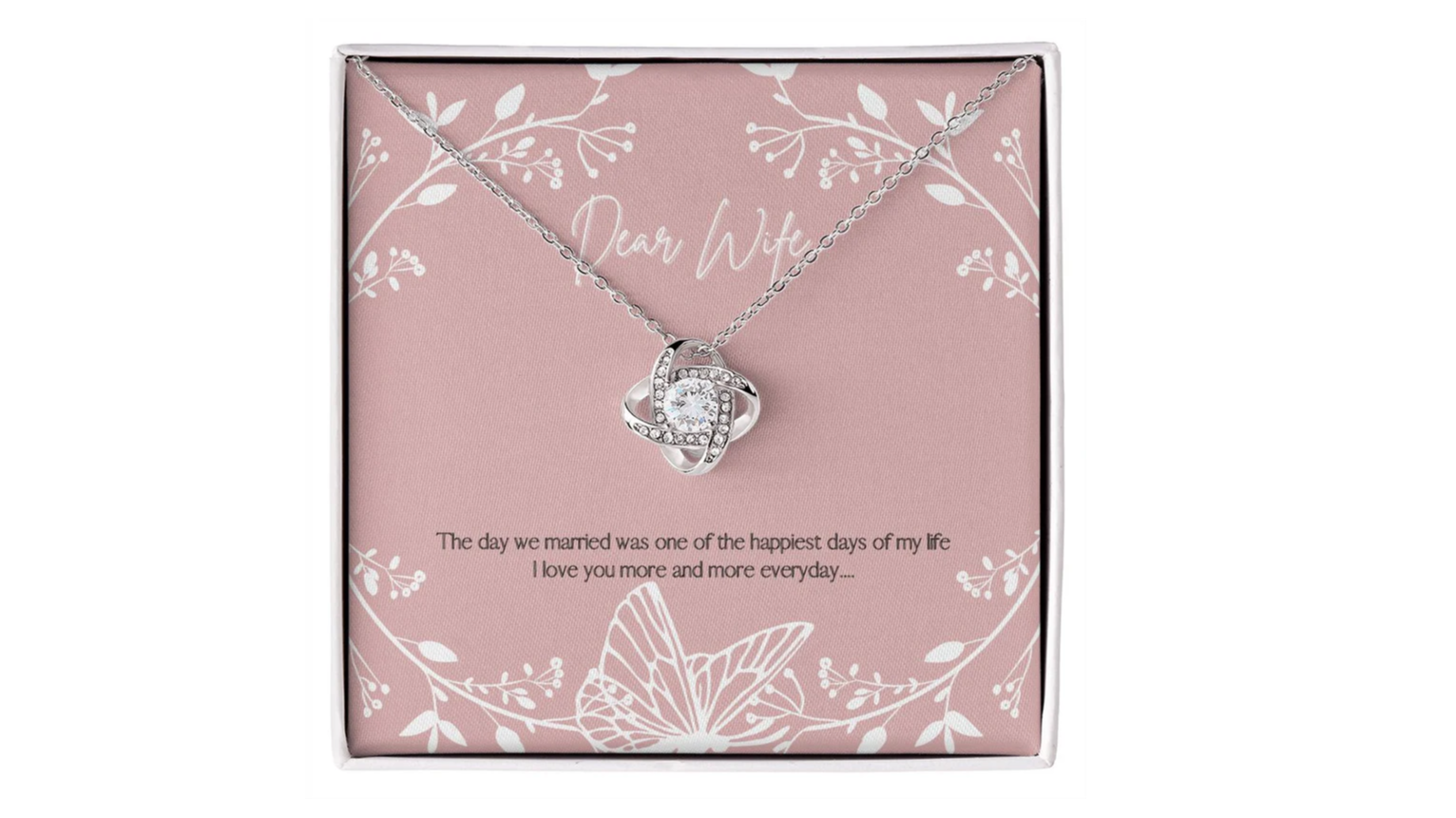
The love knot stands as one of humanity’s most enduring symbols of unbreakable connection. Ancient Greeks wore love knots to represent the binding of souls, while Egyptian couples exchanged knotted jewelry as marriage tokens. Celtic traditions elevated the symbol further, with intricate knot designs representing the eternal nature of true love—no beginning, no end, just continuous connection.
These historical precedents give modern love knot jewelry profound depth. Pieces like the Love Knot Necklace from Jewelry Gifted carry this ancient symbolism forward, transforming a simple gift into a meaningful declaration of eternal commitment.
What makes the love knot particularly powerful is its visual representation of two separate elements becoming inseparably intertwined. This imagery connects deeply with couples who see their individual lives as beautifully bound together in marriage.
What Makes Jewelry Emotionally Powerful
Jewelry’s emotional impact stems from its ability to be both intimate and public. Unlike other gifts that remain private, jewelry allows your wife to carry a piece of your love with her throughout her day. Every glance in the mirror, every compliment from a friend becomes a moment to remember your thoughtfulness.
The act of putting on jewelry also creates a daily ritual of connection. When she fastens a necklace you gave her, she’s physically enacting the bond between you. This repetitive, tactile experience reinforces positive feelings about the relationship and the giver.
Additionally, jewelry’s durability means it can become an heirloom, carrying emotional significance across generations. A meaningful piece becomes part of family history, telling the story of a love that was strong enough to create lasting symbols.
Science Shows Meaning Beats Price Every Time
Neuroscience research reveals fascinating insights about how our brains process gifts. When someone receives a thoughtful present, it activates the brain’s reward centers while simultaneously strengthening neural pathways associated with the giver. This creates a powerful psychological connection that expensive but impersonal gifts simply cannot match.
The key difference lies in how meaningful gifts engage our memory systems. Thoughtful presents become embedded in our personal narratives, while generic expensive items are processed more like material acquisitions. This explains why people can instantly recall details about a handmade gift from years ago but struggle to remember expensive jewelry that lacked personal significance.
Recipients Think About Thoughtful Gifts Far More Often
University research tracking gift recipients for twelve months revealed striking patterns in how people think about different types of presents. Participants thought about meaningful, personalized gifts significantly more frequently throughout the year—creating nearly daily reminders of the giver’s thoughtfulness.
In contrast, expensive but impersonal gifts were mentioned far less often over the same period. The emotional staying power of thoughtful presents creates ongoing positive associations with the relationship, while pricey but generic items quickly fade from conscious awareness.
This data explains why couples report higher relationship satisfaction when partners consistently give thoughtful rather than expensive gifts. Each time the meaningful gift comes to mind, it reinforces feelings of being understood, valued, and loved.
Your Brain on Gift-Giving
The neurochemistry of meaningful gift-giving creates a powerful cycle of connection for both giver and receiver. When someone receives a thoughtful present, their brain releases dopamine (pleasure) and oxytocin (bonding hormone), creating feelings of happiness and attachment to the giver.
Simultaneously, the act of giving meaningful gifts triggers similar neurochemical responses in the giver’s brain. This explains why people often report feeling as good about giving the perfect gift as recipients do about receiving it. The shared neurochemical experience strengthens the emotional bond between partners.
Research shows this effect is significantly stronger with personalized, meaningful gifts compared to expensive but generic presents. The brain responds more powerfully to gestures that demonstrate understanding and effort rather than purchasing power.
Why Expensive Doesn’t Equal Appreciated
Gift-givers consistently overestimate recipients’ focus on price while underestimating their desire for thoughtfulness. This misconception leads to the common scenario where someone spends beyond their means on an impressive gift, only to watch it generate less enthusiasm than a simple but personal gesture.
The psychological explanation involves different value systems. Gift-givers often think about the sacrifice involved in purchasing something expensive, assuming recipients will appreciate this financial effort. However, recipients typically focus on what the gift says about the giver’s understanding of them personally.
This disconnect explains why a $20 item that perfectly matches someone’s interests often creates more joy than a $200 generic luxury item. The brain processes personalized attention as more valuable than monetary expenditure.
Learn Your Wife’s Love Language for Better Gifts
Understanding how your wife prefers to receive love transforms gift-giving from guesswork into targeted expression. The five love languages—words of affirmation, acts of service, receiving gifts, quality time, and physical touch—provide a framework for identifying what truly makes her feel cherished.
Most people express love in the language they prefer to receive, making observation a powerful tool for discovery. Pay attention to how your wife shows affection to you and others, as this often reveals her primary love language.
1. Learn the Five Love Languages
Words of Affirmation: People with this love language thrive on verbal appreciation, compliments, and expressions of love. They remember encouraging words long after they’re spoken and feel most loved when hearing specific praise and acknowledgment.
Acts of Service: These individuals feel loved when others do helpful things for them. Whether it’s handling chores, running errands, or solving problems, actions speak louder than words for this group.
Receiving Gifts: This language isn’t about materialism but about the thoughtfulness behind the gesture. People with this love language appreciate the time, effort, and consideration that goes into selecting something special for them.
Quality Time: Focused, undivided attention makes these people feel most loved. They value deep conversations, shared activities, and being the center of their partner’s attention without distractions.
Physical Touch: Appropriate physical affection, from holding hands to hugs and cuddles, communicates love most effectively to these individuals. Touch serves as their primary emotional connector.
2. Watch How She Shows Love to You
Observe the patterns in how your wife naturally expresses affection. Does she frequently offer compliments and verbal encouragement? She likely values words of affirmation. If she’s always doing helpful things for family members or anticipating needs, acts of service probably connect with her.
Notice her requests and complaints, as these often reveal her love language. “We never talk anymore” suggests quality time, while “You never tell me you love me” points to words of affirmation. “I wish you would help with…” indicates acts of service.
Pay attention to what disappoints her most in the relationship. Someone whose primary language is physical touch will feel unloved when physical affection decreases, while someone who values quality time will feel neglected when you’re consistently distracted during conversations.
3. Test Each Language with Small Experiments
Conduct informal experiments by focusing on one love language at a time for a week. Try leaving encouraging notes for words of affirmation, handling her usual responsibilities for acts of service, planning phone-free time together for quality time, or initiating more physical affection for touch.
Watch her response carefully. Does she mention the gesture later? Does her mood improve? Does she reciprocate or ask for more? These reactions indicate which language connects most strongly with her.
For receiving gifts, try small, thoughtful items related to her interests. The key isn’t expense but attention to what she’s mentioned wanting or needing. Her reaction to these experiments will reveal whether gift-giving is her primary love language.
4. Match Your Gifts to Her Primary Language
Once you’ve identified her love language, align your gifts accordingly. For words of affirmation lovers, consider a custom journal filled with reasons you love her, framed love letters, or a book of favorite quotes about your relationship.
Acts of service recipients appreciate gifts that make their lives easier: meal planning services, house cleaning, or taking over responsibilities they typically handle. The gift is your time and effort rather than a physical object.
Quality time enthusiasts value experiences over things. Plan date nights, weekend getaways, or activities you can enjoy together. The gift is your focused attention and shared memories.
Physical touch individuals appreciate gifts that improve comfort and connection: cozy robes, massage oils, soft blankets, or spa experiences that involve nurturing touch.
Simple Examples That Create Lasting Memories
The most powerful gifts often cost little but require significant thought and effort. A handwritten letter detailing specific moments when you felt proud to be her husband creates a keepsake she’ll treasure forever. Unlike expensive items that might lose their appeal, heartfelt words gain value with time.
Creating a playlist of songs that tell your relationship story demonstrates attention to shared experiences and personal preferences. Each song becomes a trigger for positive memories, making the gift emotionally rich despite costing nothing to assemble.
Breakfast in bed shows effort, planning, and prioritization of her comfort. The temporary nature of the meal makes it feel special rather than routine, while the service aspect demonstrates love through action.
Planning a phone-free date requires intentionality and creates space for genuine connection. In our distracted world, undivided attention has become a rare and precious gift that costs nothing but means everything.
Choose Connection Over Cost
The most successful gift-givers shift their focus from impressing to connecting. Instead of asking “What’s expensive enough?”, they ask “What would show her I really see and understand her?” This change in perspective leads to gifts that strengthen relationships rather than strain budgets.
Meaningful gift-giving requires ongoing attention to your wife’s interests, struggles, dreams, and preferences. It means listening when she mentions small frustrations or expresses excitement about something new. These moments provide gift inspiration that no amount of money can buy.
The goal isn’t to eliminate all expensive gifts but to ensure that price never becomes a substitute for thoughtfulness. Whether you spend $20 or $200, the determining factor in a gift’s impact is how clearly it communicates your understanding of and care for the recipient.
Remember that gifts serve as tangible representations of your relationship’s emotional foundation. Choose presents that reflect the depth of your connection, the uniqueness of your bond, and your commitment to truly knowing the person you love.
For meaningful jewelry that symbolizes eternal love and connection, visit the thoughtful collections at Jewelry Gifted, where each piece is designed to express the deeper bonds that unite couples.
Jewelry Gifted
999 Willow Grove St
Hackettstown
New Jersey
07840
United States